Why Seaweed Should Be The Star Of Your Skincare Routine
 Updated: Sep. 15, 2017




Never tried seaweed beauty products? Cosmetics companies are sourcing ocean ingredients. But does skin care from the sea really work?
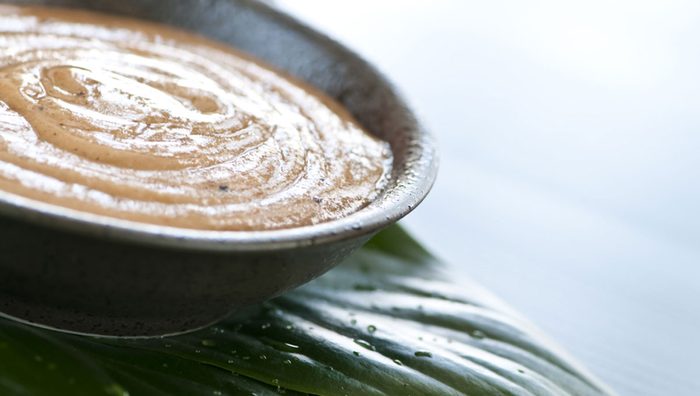
Say buh-bye to high-end creams and hello to seaweed beauty!
Haven’t heard of seaweed beauty? For centuries, humans have harvested the vast resources of the underwater world to enhance skin. Luxury skincare companies like La Mer, Phytomer, La Prairie and Kiehl’s have built the majority of their reputations on high-end creams formulated with ingredients like sea kelp and caviar. But with consumers seeking more natural products, the marine beauty wave has gone mainstream – introducing seaweed as its go-to ingredient.
Brands such as Lush, The Body Shop and St. Ives use ocean-sourced ingredients, while small-batch companies such as B.C.’s Seaflora and Newfoundland’s Indigena have created lines around ocean plants.
Companies like La Prairie say their research reveals sea ingredients make excellent beauty products: They moisturize, fight free radicals and tighten skin. But does this beauty trend harm the ecosystem?
In Canada, the Department of Fisheries and Oceans, in conjunction with the provinces, regulates seaweed harvest, and there are rules in the U.S. and Europe, too, since these plants serve as a portion of the ocean’s food chain and as a nesting ground for some fish eggs. But in unregulated waters, seaweed clear-cutting for various purposes has led to declines in the fish population.
Aware of the risk, some companies (including Lush, Seaflora and Indigena) harvest ingredients themselves and always cut seaweed, never yanking it from the seabed, which would stop it from growing back.
Others, which buy from contracted harvesters, say they screen suppliers carefully. Phytomer now sources farmed sea plants and Dermalogica grows its ingredients in the lab.
Some companies explain their harvesting practices on their websites, but it’s best to check if you’re concerned.
Is seaweed beauty really beneficial for my skin?
With tens of thousands of varieties in the world, seaweed (a type of large algae) could be the most ubiquitous underwater ingredient in skin care.
Medical studies show taking it in supplement form or including it in your diet can help to reduce joint pain, lower blood lipids for better heart health, and prevent allergies. Cosmetics companies look to these results, plus research by marine scientists and experiments in their own labs, to formulate products.
Our skin likes seaweed’s nutrients such as beta-carotene, potassium, zinc and iodine.
“Seaweeds don’t have a root system,” says Diane Bernard, owner of Seaflora in Sooke, Vancouver Island. “They take nutrients directly from the ocean, so these nutrients are more potent than they are in land plants.”
Lisa Walsh, owner of Indigena in Bay de Verde, Nfld., says “sea plants are eight times more potent than land botanicals.”
Bernard harvests laminaria, a large brown seaweed (also called kelp) that hydrates, soothes and stimulates collagen for Seaflora’s Laminaria Facial Moisturizer (kelp is also in Lush’s Sea Vegetable Soap). Walsh incorporates antioxidant-rich blue-green algae (also called spirulina), along with kelp, in Indigena’s Sea Mineral Mist toner.
Green seaweeds act mainly as an astringent. Bernard uses one called sea lettuce in her Sea Foam Cleansing Concentrate. Red seaweed is rich in beta-carotene, which has antioxidant and anti-inflammatory properties; it’s one of the key ingredients in Dermalogicas Power Rich moisturizer.
Land plants that grow on the shoreline have self-regenerating and stress-resistant properties, so La Mer takes stem cells from Sea Holly in coastal France, grows them in a lab and uses them as an anti-aging ingredient in The Regenerating Serum.
Phytoplankton, tiny plant-like microorganisms, are a favoured ingredient of La Prairie, which mixes them into Advanced Marine Biology Day Cream SPF 20, claiming they fight ultraviolet damage and free radicals. Kiehl’s, meanwhile, heads to the Galapagos Islands for a molecule living deep in the sea that the company says protects and soothes skin. That, along with an extract from corallina (a coral that thickens the skin), goes into Abyssine Cream.
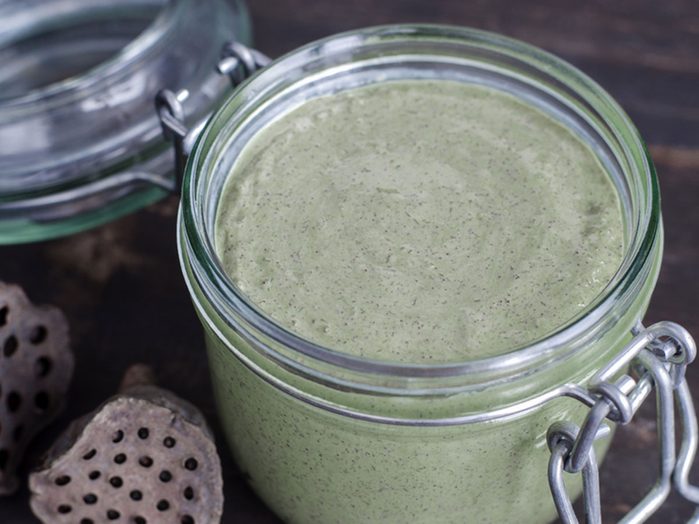
Do these seaweed beauty products actually work?
As with many beauty products, it’s hard to tell how effective ocean ingredients truly are.
Phytomer is one of the few skincare companies that releases its lab results (one in-house study found that its brown seaweed derived molecule Pheohydrane increased the skin moisture of 15 users by 215 per cent after seven days).
Bernard says some companies over-hype their seaweed beauty lines and use as little as two per cent of a sea ingredient in their products, while she fills hers with around 75 per cent.
Paula Begoun, author of Don’t Go to the Cosmetics Counter Without Me, writes on her website that algae and seaweed do have antioxidant properties (as do many other ingredients) but that their anti-aging claims are “completely unsubstantiated.”
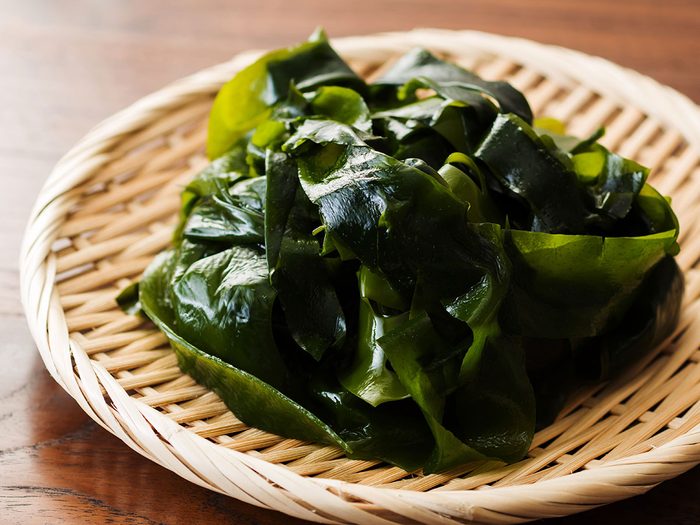
How is seaweed processed?
To further differentiate themselves, cosmetics makers say processing impacts a product’s efficacy and their own way is, of course, best.
Indigena uses a seven-minute dehydrating process that ensures freshness.
Phytomer freeze-dries ingredients just after they are collected from the sea.
Dermalogica claims that wild ingredients can be inconsistent and that it can better control efficacy by growing plants in the lab. Other companies eschew such approaches.
“I believe that if things are picked apart too much, they lose their magic,” says Helen Ambrosen, arts and sciences coordinator and co-founder of Lush at its head office in Dorset, England. “Everybody knows that an apple is better for you than a vitamin tablet.”
Lush puts sea salt directly into its Big Shampoo and its Ocean Salt Face and Body Scrub, and simmers fresh seaweed before mixing it into Aqua Marina Cleanser.
Bernard cold-presses seaweed to harness its natural powers.
So, feel like taking a dip? Research-driven companies already understand many earthbound ingredients, but the sea has such vast potential that you can be sure beauty companies will continue to explore on behalf of you and your skin.
Newsletter Unit