What Are Parabens? And Are They Really That Bad?
 Updated: Jul. 16, 2019




Parabens are a common cosmetic ingredient and the object of much vilification. Find out what they really are and whether you should be seeking out paraben-free products.
What are parabens?
You may have noticed that “paraben free” labels are popping up everywhere. And you’ve probably heard that you should avoid parabens. But do you know what they are?
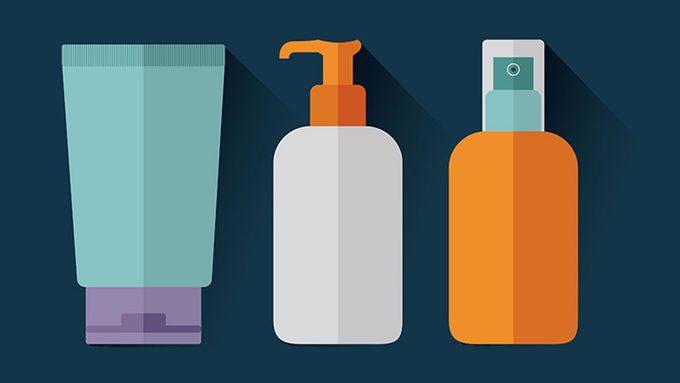
Parabens are the most widely used preservatives in personal care products — stopping fungus, bacteria and other microbes from growing in your favourite products, especially in the moist, warm environment of a bathroom.
Their names are a mouthful: methylparaben, ethylparaben, propylparaben, butylparaben and isobutylparaben. You’ll find them listed on thousands of personal care products such as shampoos, mascara, foundations and body lotions. But over the past few years, a debate has been building among scientists, product safety regulators and cosmetic manufacturers about just how harmful these chemicals are for your health.
The David Suzuki Foundation includes parabens on their Dirty Dozen list and the European Commission on Endocrine Disruption lists parabens as Category 1 priority substances based on evidence that they interfere with hormone function. Health Canada is currently conducting an assessment of parabens in all uses, which will be published as a draft in Summer 2019. Expect more information to come on the government stance. Read on for more about the paraben debate. (And don’t miss the debate on petrolatum use in cosmetics.)
Parabens and cancer
One of the most vocal opponents of the use of parabens is Philippa Darbre, a senior lecturer in oncology and researcher in biomolecular sciences at the University of Reading, in England. She specializes in the impact of estrogen on breast cancer. In 2004, Darbre’s team published a pivotal study that detected parabens in 18 of 20 samples of tissue from breast tumour biopsies. Her study didn’t prove parabens cause cancer, only that they were easily detected among cancerous cells. The study was criticized for not comparing paraben levels in normal tissue, but nevertheless, the results called out for more investigation.
“We’ve known for more than 25 years that estrogen exposure is linked to breast cancer development and progression; it is the reason tamoxifen (commonly prescribed to women with breast cancer) is used to disrupt estrogen receptors,” says Darbre. “So it is not such a leap to be concerned that repeated, cumulative, long-term exposure to chemicals that weakly mimic estrogen might have an impact.”
Darbre is particularly concerned about lotions and deodorants being applied under the arms or near the breast. She notes roughly 55 percent of all breast cancer tumours occur in the upper outside portion of the breast, the section closest to the underarm. The U.S. National Cancer Institute partly dismissed the claim, maintaining that at present, there is no decisive evidence to conclude that the parabens in these products are linked to breast cancer.
Evaluating the risks
One Danish study, however, raised concerns. It showed that parabens could be detected in the blood and urine of healthy young male volunteers a few hours after lotions were applied to their skin. The authors concluded that since the chemicals could be absorbed, metabolized and excreted, they could potentially contribute to adverse health effects.
But Health Canada, the U.S. Food and Drug Administration, and the Cosmetic Ingredient Review (CIR), a U.S.-based industry-sponsored panel of experts, have deemed parabens safe at current exposure levels. The CIR examined parabens in 1984 and again in 2005, and both times concluded that parabens at the low levels found in personal care products are not a concern.
But researchers and organizations such as the U.S. Environmental Working Group say research must not just look at individual product exposure but must find a way to evaluate the cumulative impact of many products used over many years. EWG’s surveys show the average adult consumer uses nine personal care products a day.
What consumers want
For consumers like Jude Isabella, a Victoria mom and the editor of a national children’s science magazine, the debate, while inconclusive, is enough for her to limit her exposure. Since cancer runs in her family, she shops for cosmetic products labelled “paraben free.” “Why slather yourself with chemicals when we don’t yet have the answer? I’m not paranoid, but I’d rather err on the side of caution,” she says.
Darren Praznik, president of the Canadian Cosmetic, Toiletry and Fragrance Association (the leading trade association for personal care products in Canada), says the organization is very sensitive to consumer concerns. But that the ingredients used in products are strictly regulated and monitored by Health Canada. “We are satisfied that the regulation process is robust, science-based and protects the consumer.”
Some manufacturers have gone on the record about their long-term plans to find paraben replacements. Jamieson Laboratories, a Canadian firm that makes vitamins, supplements and skin creams, notes that while there is no firm evidence that parabens pose a health risk, they now have five paraben-free products. It is also working to remove parabens from more of its products, predominantly to satisfy growing consumer demand.
“We have not set a specific deadline, but are working aggressively to eliminate parabens in our products,” says Gary Leong, vice-president of scientific and technical affairs for Jamieson. He notes that until effective alternatives are found, more consumers might actually be harmed by microorganisms growing in their products than by the theoretical paraben threat.
Is there an alternative to parabens?
There is truth to that point; even paraben-free product producers like Alain Ménard, of the Hawkesbury, Ontario-based Green Beaver Company, say it’s a challenge to formulate products without parabens preservative talents. Ménard, a microbiologist, and his wife, biochemist Karen Clark, worked in the chemical and pharmaceutical industries for years before starting Green Beaver. Clark formulates products and Ménard tests them for microbiological safety before they’re released.
“Creams and lotions are the toughest. We often have to go back to the drawing board because on testing we have got something growing in it,” says Ménard. As preservatives, Green Beaver uses oregano, thyme, rosemary, goldenseal root, grapefruit seed extract or lavender oil in various combinations. But they’re always looking for other formulations and combinations with natural preservative properties.
“The reason parabens are used so widely is that they are cheap and effective,” says Ménard, noting that parabens largely replaced formaldehyde many decades ago as a preservative. “We don’t want to take a step back to that chemical. Everyone is looking for better alternatives.”
So until consumers decide they’re happy storing cosmetic products in the fridge, most companies will continue to use parabens while searching for preservatives without estrogenic qualities. Meanwhile, scientists like Darbre aim to add to the body of evidence to clarify the debate.
“I’m sure that in the next 10 years, parabens will be phased out. That may not be so much because of conclusive evidence as consumer demand,” notes Ménard.
Next, check out these natural beauty brands you probably didn’t know were Canadian.