Are artificial sweeteners really safe?
 Updated: Jul. 16, 2019




Sugar alternatives are everywhere’but are they healthy, and do they actually help you lose weight?
Source: Best Health Magazine, November/December 2009
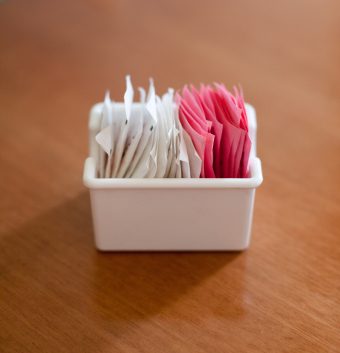
Whether we’re counting calories or watching our sugar intake, many of us regularly consume artificial sweeteners. Found in fat-free yogurt, sugar-free gum and numerous ‘diet’ foods, these compounds’which offer sugar’s sweetness without the calories’are hard to avoid.
The safety factor
But are they safe? Some that are used widely as table sugar substitutes (e.g., to sweeten coffee or tea) and as commercial food additives have been linked to cancer in animal studies. Yet no conclusive evidence shows they pose health risks to people, including pregnant women or children, say Health Canada, the U.S. Food and Drug Administration (FDA) and the World Health Organization.
Even the independent watchdog Center for Science in the Public Interest (CSPI) says the potential dangers are not as threatening as the obesity epidemic. But Michael Jacobson, executive director of the CSPI in Washington, D.C., says he has reviewed the studies and is not as convinced of sweetener safety. He would like governments to fund safety studies, rather than base their approval on industry research. ‘The risk of any individual getting cancer from sweeteners is tiny,’ he says. ‘But when you multiply that tiny risk by millions of consumers, it becomes significant enough for governments to act. I think they’ve been lax.’
The weight loss connection
Do sweeteners help to promote weight loss? Maybe not. A study in the August 2008 issue of Obesity found that normal-weight participants who drank more than 21 cans of diet pop containing aspartame per week had over double the risk of becoming overweight than those who used no sweeteners. Sharon Fowler, one of the study’s authors and a faculty associate in clinical epidemiology at the University of Texas Health Science Center at San Antonio, says, ‘Artificial sweeteners have been associated with increased weight gain in rodents, and in two large studies, daily intake of diet sodas was linked with an increased risk of metabolic syndrome [a group of symptoms related to cardiovascular disease and diabetes].’
These findings have some experts concerned. Dr. Arya Sharma, who is chair of cardiovascular obesity research and management at the University of Alberta, tells his patients to avoid sweeteners and, instead, consume moderate amounts of sugar. (Health Canada advises limiting sugars to no more than 25 percent of calorie intake. Even less is better, say experts.)
Dr. Yoni Freedhoff, medical director of the Bariatric Medical Institute in Ottawa, contends that none of these studies has shown a causal relationship between sweeteners and obesity. Among the theories are a psychological effect’people replace the ‘saved’ calories with high-fat foods’and a biological effect, where sweeteners ‘trick’ the brain so people feel less satiated and consume more calories. But, says Freedhoff, ‘I will trade this not-yet-proven risk for the real risk of weight gain from high-caloric intake.’
Sweeteners can help control weight when consumed as part of a healthy diet, Health Canada tells us. However, substituting unhealthy foods that have sweeteners (such as candy and soda) for healthier ones (fruit and milk) can lead to problems such as heart disease and osteoporosis.
So eat a balanced diet, and if you want an artificial sweetener, choose wisely‘a range of products is available as food manufacturers look for a balance between taste and stability.
Here are the most common sweeteners, some points that are in dispute and the bottom line on which ones are considered safe.
Sucralose
A table sweetener that can replace sugar in coffee or baking, and a food additive used in more than 4,000 foods and beverages.
Brand name Splenda
What’s it made of? Sucralose is derived from the reaction of sugar (sucrose) with chlorine.
How safe is it? Governments and the CSPI found it passed all animal studies.
Verdict Safe.
Aspartame
A table sweetener, and an additive in desserts, chewing gum, soft drinks and cereals.
Brand names Equal and NutraSweet
What’s it made of? A synthetic derivative of a combination of the amino acids aspartic acid and phenylalanine.
How safe is it? People with the rare disorder phenylketonuria (PKU) cannot metabolize phenylalanine, and should avoid it. Jacobson says animal studies done by the European Ramazzini Foundation of Oncology and Environmental Sciences showed an increased risk of leukemia and lymphoma. ‘It was pretty damning evidence.’ However, Health Canada reviewed these studies and found serious flaws.
Verdict Probably safe for most people.
Neotame
A new additive expected to replace aspartame over the next five years. In some chewing gums; not yet widely in use.
Brand name Neotame
What’s it made of? Aspartic acid and phenylalanine, similar to aspartame, but it is not broken down to phenylalanine so it’s not toxic to people with PKU.
How safe is it? Health Canada and the CSPI say animal and human studies have not found any safety concerns.
Verdict An alternative to aspartame, if desired.
Acesulfame
A table sweetener and additive often combined with aspartame in diet sodas and gum.
Brand name Sunett
What’s it made of? A synthetic chemical, also called acesulfame potassium or acesulfame-K.
How safe is it? The CSPI contends that governments’ safety assessments were based on flawed animal studies in the 1970s. Nevertheless, these studies did show a cancer risk. Health Canada does not deny that the evidence of acesulfame’s safety is based on old data.
Verdict Avoid.
Saccharin
A table sweetener that’s sold in the restricted-access area of pharmacies.
Brand names Hermasetas and Sweet’N Low
What’s it made of? A chemical called benzoic sulfimide.
How safe is it? Shown to be carcinogenic in lab rats in the 1970s, and subsequently delisted as an additive in Canada. Health Canada contends that some recent studies show that the cancer in lab rats is not relevant to humans. It is considering re-listing. With regard to cancer, Jacobson says, ‘there’s no slam-dunk evidence for either side.’
Verdict Avoid for now.
Cyclamate
A table sweetener that’s to be used only on the advice of a physician.
Brand name Sugar Twin
What’s it made of? A salt of cyclamic acid.
How safe is it? Banned as an additive since animal studies showed it causes bladder cancer. Health Canada allows its sale with a warning label.
Verdict Avoid.
A herbal alternative?
Drink makers are keen to sweeten sodas with stevia’a South American herb many times sweeter than sugar yet calorie free. In 2008, the FDA gave a green light to the stevia extract rebaudioside A, accepting industry research showing it is ‘generally recognized as safe.’ However, CSPI’s Michael Jacobson says his group commissioned a review of safety data that found the extract may cause genetic mutations. Health Canada also takes a cautionary approach and doesn’t allow the sale of foods using stevia as a sweetener. The herb is available in health food stores.
Update: In November 2012, Health Canada approved the use of steviol glycosides as a table-top sweetener and as a sweetener in certain food categories.
This article was originally titled “The Truth About Artificial Sweeteners,” in the November/December 2009 issue of Best Health. Subscribe today to get the full Best Health experience’and never miss an issue!’and make sure to check out what’s new in the latest issue of Best Health.